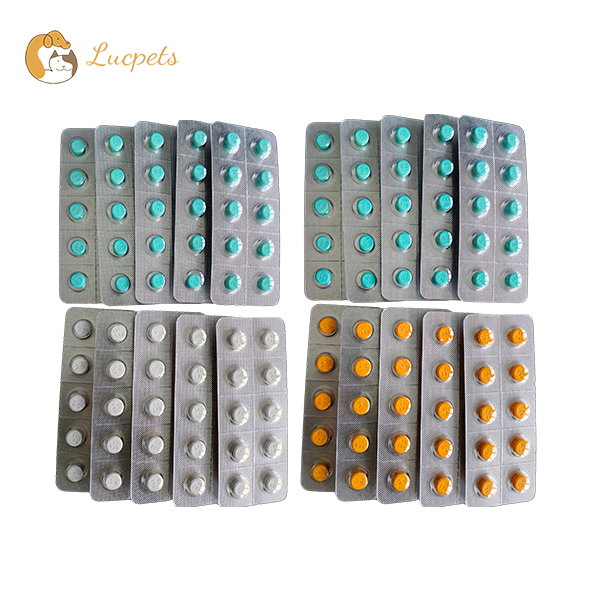
Product Name: Toceranib Phosphate Tablets
Strength: 10mg/tablet , 15mg/tablet , 50mg/tablet
Package: 10 tablets per blister strip.
For Use In: Dogs.
Main component: Each tablet contains 10 mg, 15 mg, or 50 mg of Toceranib (as Toceranib Phosphate).
Actions & Indications:
Toceranib is a selective receptor tyrosine kinase inhibitor primarily targeting KIT, PDGFR, and VEGFR. By inhibiting these signaling pathways crucial for tumor cell proliferation, survival, and angiogenesis, it exerts an antitumor effect.
Indicated for the treatment of recurrent or metastatic canine mast cell tumors (MCT), particularly in cases where complete surgical excision is not possible or metastasis has occurred.
Dosage: For oral use only.
Administration with food is recommended to reduce gastrointestinal irritation.
Recommended Dosage: 3.25 mg/kg body weight, administered every other day (e.g., Monday, Wednesday, Friday).
|
Dog Body Weight
|
|
Number of Tablets
|
|
Pounds
|
kg
|
Dose
|
10mg
|
15mg
|
50mg
|
|
11.0-11.8
|
5.0-5.3
|
15mg
|
|
1
|
|
|
11.9-15.2
|
5.4-6.9
|
20mg
|
2
|
|
|
|
15.3-18.5
|
7.0-8.4
|
25mg
|
1
|
1
|
|
|
18.6-22.0
|
8.5-10.0
|
30mg
|
|
2
|
|
|
22.1-25.4
|
10.1-11.5
|
35mg
|
2
|
1
|
|
|
25.5-28.7
|
11.6-13.0
|
40mg
|
1
|
2
|
|
|
28.8-32.2
|
13.1-14.6
|
45mg
|
|
3
|
|
|
32.3-35.5
|
14.7-16.1
|
50mg
|
|
|
1
|
|
35.6-38.8
|
16.2-17.6
|
55mg
|
1
|
3
|
|
|
38.9-42.3
|
17.7-19.2
|
60mg
|
1
|
|
1
|
|
42.4-45.6
|
19.3-20.7
|
65mg
|
|
1
|
1
|
|
45.7-50.7
|
20.8-23.0
|
70mg
|
2
|
|
1
|
|
50.8-59.3
|
23.1-26.9
|
80mg
|
|
2
|
1
|
|
59.4-65.9
|
27.0-29.9
|
95mg
|
|
3
|
1
|
|
66.0-71.2
|
30.0-32.3
|
100mg
|
|
|
2
|
|
71.3-76.3
|
32.4-34.6
|
110mg
|
1
|
|
2
|
|
76.4-79.6
|
34.7-36.1
|
115mg
|
|
1
|
2
|
|
79.7-84.7
|
36.2-38.4
|
120mg
|
2
|
|
2
|
|
84.8-94.8
|
38.5-43.0
|
130mg
|
|
2
|
2
|
|
94.9-105.0
|
43.1-47.6
|
150mg
|
|
|
3
|
|
105.1-110.0
|
47.7-49.9
|
160mg
|
1
|
|
3
|
|
110.1-113.5
|
50.0-51.5
|
165mg
|
|
1
|
3
|
|
113.6-118.6
|
51.6-53.8
|
170mg
|
2
|
|
3
|
|
118.7-128.8
|
53.9-58.4
|
180mg
|
|
2
|
3
|
|
128.9-138.9
|
58.5-63.0
|
200mg
|
|
|
4
|
|
139.0-144.0
|
63.1-65.3
|
210mg
|
1
|
|
4
|
Dosage Adjustment:
The starting dose is typically 3.25 mg/kg every other day. Your veterinarian will fine-tune the dose within the recommended range based on the individual dog's tolerance (particularly to adverse effects) and therapeutic response.
Treatment Course:
Treatment should continue until disease progression or intolerable toxicity occurs. Do not discontinue or alter the dosing schedule without veterinary instruction.
Contraindications & Warnings:
Absolute Contraindications:
Hypersensitivity to toceranib or any excipient.
Dogs with severe hepatic impairment.
Dogs with active, severe gastrointestinal bleeding or ulceration.
STRICTLY PROHIBITED for use in humans, cats, or other animals.
Relative Contraindications / Use with Caution:
Mild to moderate hepatic impairment.
Renal insufficiency.
History of cardiac disease.
Concurrent use with NSAIDs or corticosteroids may increase the risk of gastrointestinal toxicity and renal injury.
Reproductive Safety:Safety in pregnant, lactating bitches or breeding stud dogs has not been established.
Contraindicated.
Adverse Reactions
Common adverse reactions are related to its mechanism of action and are often manageable with dose adjustments or supportive care.
Very Common (>10%):Diarrhea, vomiting, decreased appetite, lethargy, weight loss, hypoproteinemia
(hypoalbuminemia).
Common (1-10%):Gastrointestinal hemorrhage (melena, hematochezia), pancreatitis, elevated liver enzymes, neutropenia, thrombocytopenia, proteinuria, hypertension, footpad fissures/pain.
Uncommon but Serious:Gastrointestinal perforation, severe hemorrhage, nephrotic syndrome, heart failure, arterial thromboembolism.
Monitoring Requirements:Regular monitoring (e.g., every 2-4 weeks) with complete blood count (CBC), serum biochemistry (focus on liver and kidney function, electrolytes, albumin), and urinalysis is required during treatment.
Drug Interactions
CYP450 Enzyme Substrate Drugs:Toceranib may affect the plasma concentrations of drugs metabolized by
CYP3A4, 2B11, and 2D15.
Highly Protein-Bound Drugs:Displacement interactions may occur, affecting the plasma concentrations of each drug.
Anticoagulants (e.g., Warfarin):Increases the risk of bleeding.
QT-Prolonging Drugs:Concurrent use may increase the risk of arrhythmia.
Inform your veterinarian of all medications (including prescription, over-the-counter, and supplements) the dog is
receiving.